What is PP Film for Construction Plywood?
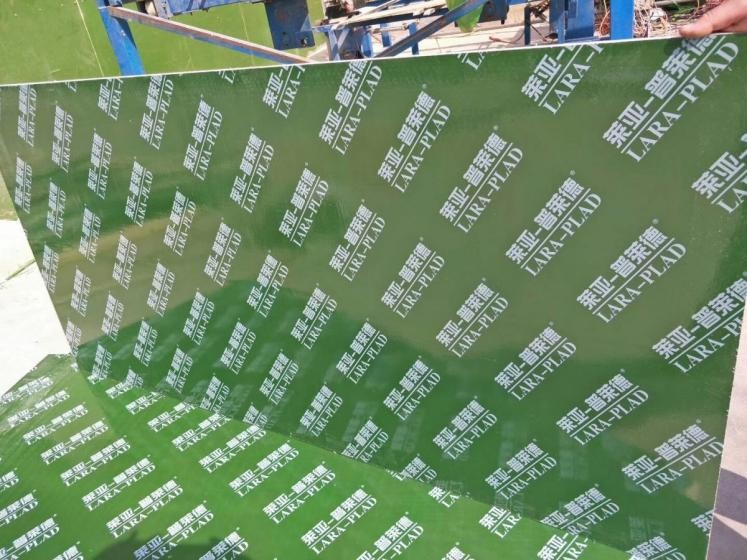
PP film for construction Plywood is a type of film made primarily from polypropylene (PP) as the main raw material, and it is widely used in the field of construction Plywood.
The following is a detailed introduction:
- Material Properties: PP film is made of polypropylene, a polymer material, which has the characteristics of low density, high strength, and good heat resistance. It can be used at around 100°C, and is resistant to corrosion by various acids, alkalis, and organic solvents. It also has excellent mechanical properties, with high tensile strength and impact resistance.
- Application Forms in Construction Plywood: As a plastic-coated film, which is thermally pressed with base materials such as birch and poplar wood for the second time to form PP flat Plywood with plastic coating.
- Functions and Advantages: The PP film has a smooth surface, which makes the Plywood easy to demold, preventing concrete from adhering to the surface. After demolding, the concrete structure has a high level of flatness and smoothness, achieving a fair-faced mirror effect, eliminating the need for secondary plastering and saving processes and costs. Meanwhile, the PP film has good water resistance and corrosion resistance, which can effectively protect the base material, preventing the Plywood from being easily damp, deformed, rotten, or rusted, thereby extending the service life of the Plywood. The number of turnover times can reach more than 30, and even some hollow-structured PP plastic construction Plywood can have a turnover number of up to about 100. In addition, the PP film is environmentally friendly and non-toxic, meeting the standards of green buildings, and it is recyclable, which is conducive to saving resources.
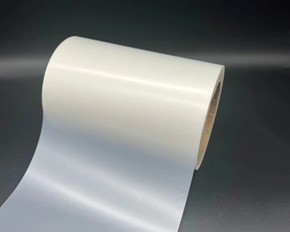
Benefits of Secondary Hot Pressing for Construction Plywood
The "secondary hot pressing" process for construction Plywood typically refers to the process of tightly bonding functional materials (such as PP film, phenolic resin film, and other facing materials) to the base material, or further strengthening the base material itself, through heating and pressurization again after the initial formation of the base material (e.g., plywood, wooden beam composite boards, fiberboards, etc.). This process is a key link in improving the performance of construction Plywood and extending its service life, with its core benefits mainly reflected in the following aspects:
- 1. Enhancing the Bonding Force Between Facing Materials and Base Material to Prevent Delamination and Peeling This is the most direct function of secondary hot pressing. During initial processing, the base material (such as multi-layer wood chips) may only be initially bonded and formed. If materials like PP film are directly coated on it, the bonding strength will be insufficient. Secondary hot pressing, by precisely controlling temperature (usually set according to the melting point of the facing material and the characteristics of the adhesive; for example, the hot pressing temperature for PP film is approximately 150-200°C), pressure (ranging from several tons to dozens of tons), and pressure-holding time, enables the adhesive on the surface of the facing material and the base material to fully melt, penetrate, and solidify, forming a tight "molecular-level" bond. In the final product, when subjected to repeated turnover, concrete lateral pressure, or external impact, the facing film will not easily peel off from the base material, fundamentally solving the problem of "peeling and bulging" in ordinary Plywood.
- 2. Improving the Surface Performance of Plywood for Efficient Demolding and Fair-Faced Concrete Effect Secondary hot pressing maximizes the advantages of facing materials (such as PP film and phenolic film): Upgraded Surface Flatness and Smoothness: During the hot pressing process, pressure flattens the facing film, eliminating tiny depressions or burrs on the surface of the base material and forming a uniform, smooth Plywood surface. This surface reduces the adhesion between concrete and the Plywood, allowing for easy demolding without excessive tapping. It not only protects the Plywood and concrete structure but also enables the concrete surface after demolding to meet the "fair-faced concrete" standard—with high flatness and smoothness, eliminating the need for secondary plastering, which directly saves subsequent processes and reduces labor and material costs. Enhanced Performance Stability: The facing film after hot pressing has a denser structure, and its water resistance, wear resistance, and corrosion resistance (such as resistance to concrete alkaline solution erosion) are significantly improved, preventing the Plywood from deformation or damage due to moisture and chemical corrosion.
- 3. Optimizing the Internal Structure of the Base Material to Enhance the Overall Strength and Stability of the Plywood Secondary hot pressing not only acts on the "surface" but also strengthens the base material itself: Eliminating Internal Defects: The initially formed base material (especially wooden base material) may have tiny gaps, bubbles, or uneven bonding areas inside. The pressure of secondary hot pressing compacts the internal structure of the base material, squeezes out air and excess adhesive, and makes the bonding between layers of the base material tighter, reducing "hollow" or "loose" parts. Improving Mechanical Properties: Plywood subjected to secondary hot pressing has significantly improved overall flexural strength, folding strength, and load-bearing capacity. For example, ordinary wooden Plywood can usually be turned over only 5-10 times, while wooden Plywood coated with PP film via secondary hot pressing can be turned over more than 30 times, or even up to 50 times, greatly reducing the cost per use.
- 4. Extending the Service Life of Plywood and Reducing Comprehensive Costs Through the dual effects of "surface protection + internal strengthening", secondary hot pressing directly extends the turnover life of the Plywood: The tight bonding between the facing film and the base material prevents the base material (especially wooden ones) from directly contacting moisture and concrete slurry, reducing problems such as moisture-induced deformation, decay, and insect infestation; The smooth and wear-resistant surface can still maintain good flatness after repeated use, eliminating the need for frequent repairs or replacements. Although secondary hot pressing increases a small amount of initial processing costs, the doubled turnover times of the Plywood and the savings in subsequent processes (such as plastering) can significantly reduce the comprehensive building material costs of the project.
- 5. Improving the Dimensional Accuracy of Plywood to Adapt to Standardized Construction Modern construction has extremely high requirements for the dimensional tolerance of Plywood (e.g., the length error needs to be controlled within ±2mm). During the secondary hot pressing process, the Plywood undergoes slight "setting shrinkage" under high temperature and pressure, and the shrinkage can be precisely controlled through process parameters.
Advantages of Eucalyptus Wood Core for Construction Plywood
In the production of construction Plywood, eucalyptus wood core (using eucalyptus wood as the core base material, often processed into forms such as veneers, battens, or wood shavings) is a widely used high-quality material. Its advantages stem from the inherent properties of eucalyptus wood and its adaptability to processing, with specific benefits as follows:
- 1. Abundant Wood Resources and More Cost-Effective Eucalyptus is a typical fast-growing and high-yield tree species. It has a short growth cycle (usually maturing in 5-8 years, much shorter than the 15-20 years required for pine, cedar, etc.). Additionally, it has strong adaptability and is easy to cultivate on a large scale, ensuring a stable supply of wood raw materials.The sufficient resource supply directly reduces the procurement cost of eucalyptus wood, making construction Plywood with eucalyptus wood core more competitive in terms of price. It is particularly suitable for large-scale construction projects sensitive to costs.
- 2. Balanced Mechanical Properties and Reliable Load-Bearing Capacity Eucalyptus wood (especially common varieties such as Eucalyptus urophylla and Eucalyptus grandis) has physical and mechanical properties that meet the stress requirements of construction Plywood: Moderate Density: The air-dry density is approximately 0.5-0.7g/cm³. It is neither as soft as softwood (e.g., pine) which is prone to deformation, nor as hard as hardwood (e.g., miscellaneous hard wood) which causes processing difficulties, achieving a balance between "strength" and "processability". Qualified Strength: It possesses good flexural strength, shear strength, and elastic modulus. Multi-layer plywood Plywood or composite Plywood made with eucalyptus wood core can withstand the lateral pressure during concrete pouring (usually construction Plywood needs to bear 15-30kN/m² of pressure) without easily bending or breaking, ensuring construction safety. Uniform Structure: Eucalyptus has relatively straight grain and fewer natural defects such as knots and holes. The wood core made from it has a more regular structure, reducing the problem of local weak stress in the Plywood caused by uneven material quality.
- 3. Stable Moisture Content, Resistant to Deformation and Cracking "Dimension stability" is one of the core performance indicators of construction Plywood (deformation will reduce the forming accuracy of concrete), and eucalyptus wood core excels in this aspect: Eucalyptus wood has fine vessels and a dense structure, resulting in relatively slow water absorption and desorption rates. After drying treatment, its moisture content can be stably controlled within 8%-12% (the optimal moisture content range for construction Plywood). Moreover, it is less likely to undergo severe shrinkage, expansion, or cracking due to changes in environmental temperature and humidity during subsequent use. Compared with wood such as pine that is prone to moisture absorption and deformation, eucalyptus wood core Plywood has a lower probability of "bulging or warping" during repeated turnover (especially when stored outdoors or in contact with concrete slurry), and can maintain a flat surface for a long time.
- 4. Excellent Processability, Adapting to Plywood Production Processes The physical properties of eucalyptus wood core are highly compatible with the mainstream production processes of construction Plywood (such as rotary cutting, hot pressing, gluing, etc.): Easy to Rotary Cut into High-Quality Veneers: Eucalyptus trunks are straight with straight grain. During rotary cutting, they can produce veneers with uniform thickness (usually 1.2-2.5mm) and smooth surfaces, with few broken edges or cracks. This provides a good foundation for the interlayer bonding of multi-layer plywood Plywood. Good Adhesion Performance: The capillary structure on the surface of eucalyptus wood can effectively absorb adhesives (such as phenolic resin, urea-formaldehyde resin). During the hot pressing process, it can tightly bond with facing materials (such as PP film, phenolic film) or other wood layers, preventing delamination and glue failure, and further improving the overall strength and service life of the Plywood. Easy to Cut and Drill: It has low cutting resistance during processing, enabling rapid standardized size cutting and drilling of installation holes, which meets the high-efficiency requirements of industrial Plywood production.
- 5. Good Environmental Friendliness and Recyclability As a fast-growing forest resource, eucalyptus is a "renewable resource". After rational harvesting, it can be replenished through artificial afforestation, conforming to the requirement of "resource sustainability" in green buildings. Plywood based on eucalyptus wood core (especially plastic-coated composite Plywood) can have its wood component recycled after scrapping for biomass energy or secondary processing (e.g., making particleboard), reducing construction waste pollution and achieving environmental benefits.
- 6. Compatible with Facing Processes, Extending Turnover Life The flat surface and stable structure of eucalyptus wood core provide a good bonding foundation for facing materials such as PP film and phenolic resin film:During the secondary hot pressing process, eucalyptus wood core is not prone to excessive shrinkage or surface damage due to high temperature and pressure. The facing material can tightly adhere to the surface of the wood core, forming a smooth, wear-resistant, and corrosion-resistant protective layer. The final finished Plywood can achieve a turnover number of more than 30 times (far exceeding the 5-10 times of ordinary pine Plywood), further reducing the cost per use.